
Advance-fee frauds are fraudulent tactics that deceive victims into paying fees in advance to facilitate a transaction which purportedly benefits them.
Advance-fee frauds are typical of Nigerian scams. They are also called 419 scams, named after the Nigerian penal code which criminalizes them. A well-known example is the “Nigerian prince” asking for help to unfreeze their money. However, there are many variations of the story. Usually, scammers try to deceive the victim into allowing the use of their bank account to help fraudsters moving money out of their country. Once involved in the scam, the victim is required to pay a series of advance fees to facilitate the transaction, which never takes place.
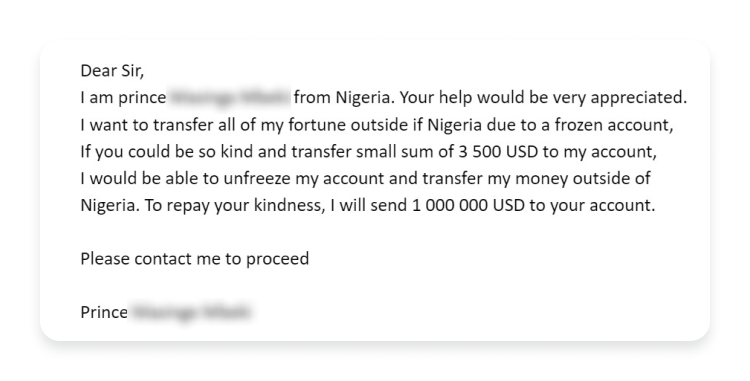
How do advance-fee frauds work?
Advance-fee frauds lure their victims with the promise of a much larger amount of money than the fee they’re asked as a reward for their help or as a compensation for their trouble. Others promise lottery wins or other enticing prizes. This is why so many people are still deceived. 419 scams alone have been around since the 1980s and they are still around. It is estimated that millions of victims have incurred losses, totaling over $82billion, peaking $12.7 billion in a year.
Modern variations
These scams are no longer so obvious and are growing more credible. For example, they might target specific categories of the population and appear to come from trusted institutions, often involving impersonation. As Nigeria is a giveaway to suspicion, scammers are now impersonating Western institutions (real of fictional).
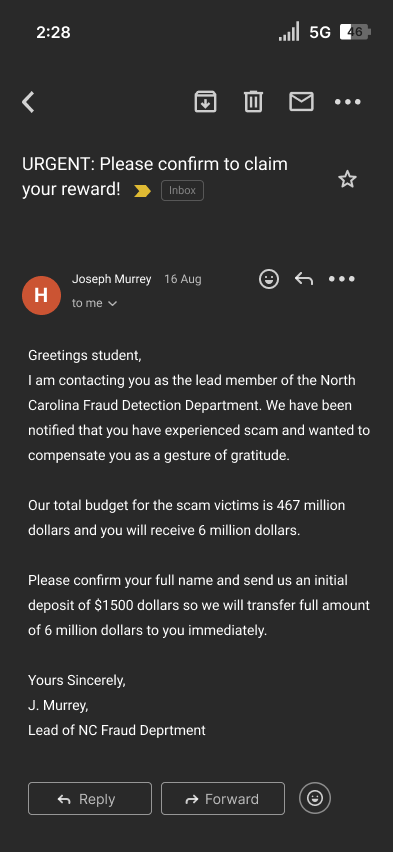
Advance-fee frauds are also found in job and employment scams and pig butchering scams.
