
Job and employment scams involve fake job offers used to steal money or personal information. Scammers target people at their weakest moment, exploiting their financial needs. In these situations, the victims are at a clear disadvantage. Job seekers tend to comply with the requests from a potential employer to make a good impression and secure the job.
Job and employment scams find a natural home in popular job boards and social media platforms dedicated to professional networking. Due to its popularity and reach, LinkedIn has seen the proliferation of these scams, especially after the COVID pandemic period. Most of these “opportunities” are, indeed, advertised as remote positions to appeal to people.
How it typically happens
- Scammers connect to their victims through emails or job platforms
- They will make you an offer without a real interview
- The fake interviewers (or managers) will then request upfront fees or equipment purchases
- You will be presented with a fake on-boarding process.
Examples
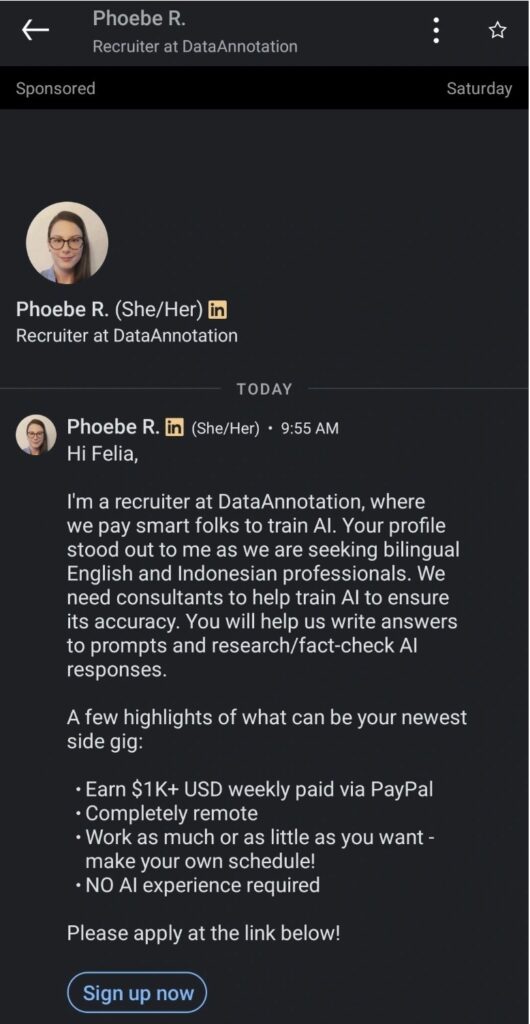
Below is an example of a fake job offer shared by a LinkedIn user. You can notice the vague title, redacted family name, and a button/link to apply to the position.
Red flags
- Too good a salary for simple work
- Requests for payment or informal payment methods (e.g., PayPal, crypto, etc.)
- Use of non-corporate email addresses
- Vague job descriptions
What to do
- Don’t send money
- Verify the company independently
- Avoid sharing sensitive data
- Report the listing
Useful articles on online scams
- What is an online scam?
- Types of online scams
- Scam victimology: why did they pick me?
- How scammers choose their targets
- Why so many scams go unreported
- Scam cases that made the news
- AI and the next wave of scams
